The call
Whether to bid. Scribe's recommendation, the evidence behind it, and your call to bid, hold or pass.
The call is the topic Paavya exists for: should you go for it? Bidding the wrong work costs weeks of your best people. The call puts the evidence in one place, so it is made on purpose, with the reasons on the record.
Making the call
When the opportunity's details are confirmed, the pursuit asks Ready to make the call?, then So, should you go for it? with three answers, each saying what it means:
- Bid: pursue it. Any conditions still open ride with the bid.
- Hold: pick a date to look at it again.
- No bid: say why, so the reason is kept for next time. The pursuit then reads No bid everywhere, and it can be reopened.
Nothing is chosen for you. Scribe marks the answer it recommends, with what is Working for you and what to Watch out for, and you confirm before anything is recorded. The decision is kept with who made it, when, and what the evidence said at the time. That snapshot is what The result compares the outcome against later.
Scribe's recommendation
Scribe recommends Bid (with any conditions still open) or Hold until there is enough to judge. It never recommends walking away on its own; passing is a person's call.
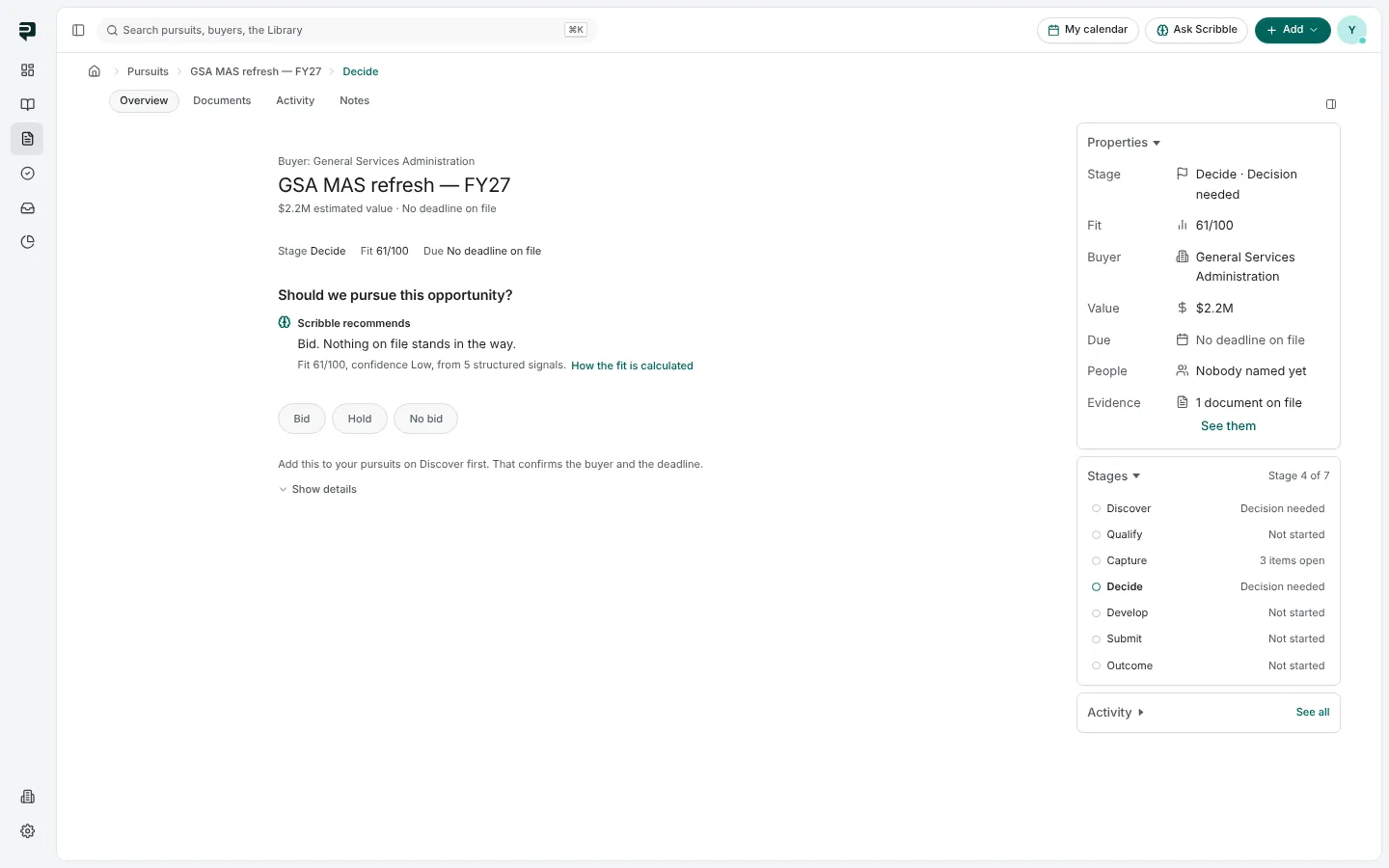
- Fit out of 100, in the band at the top of the pursuit, reads how well this opportunity matches your company. Its confidence says how much evidence stands behind it. Neither is a chance of winning.
- How the fit is calculated shows the starting point and each factor on file, with how far it moved the fit and what it rests on.
- What would change the choice says what has to happen for the recommendation to move, such as clearing a condition, and which risks would not move it.
The bid read
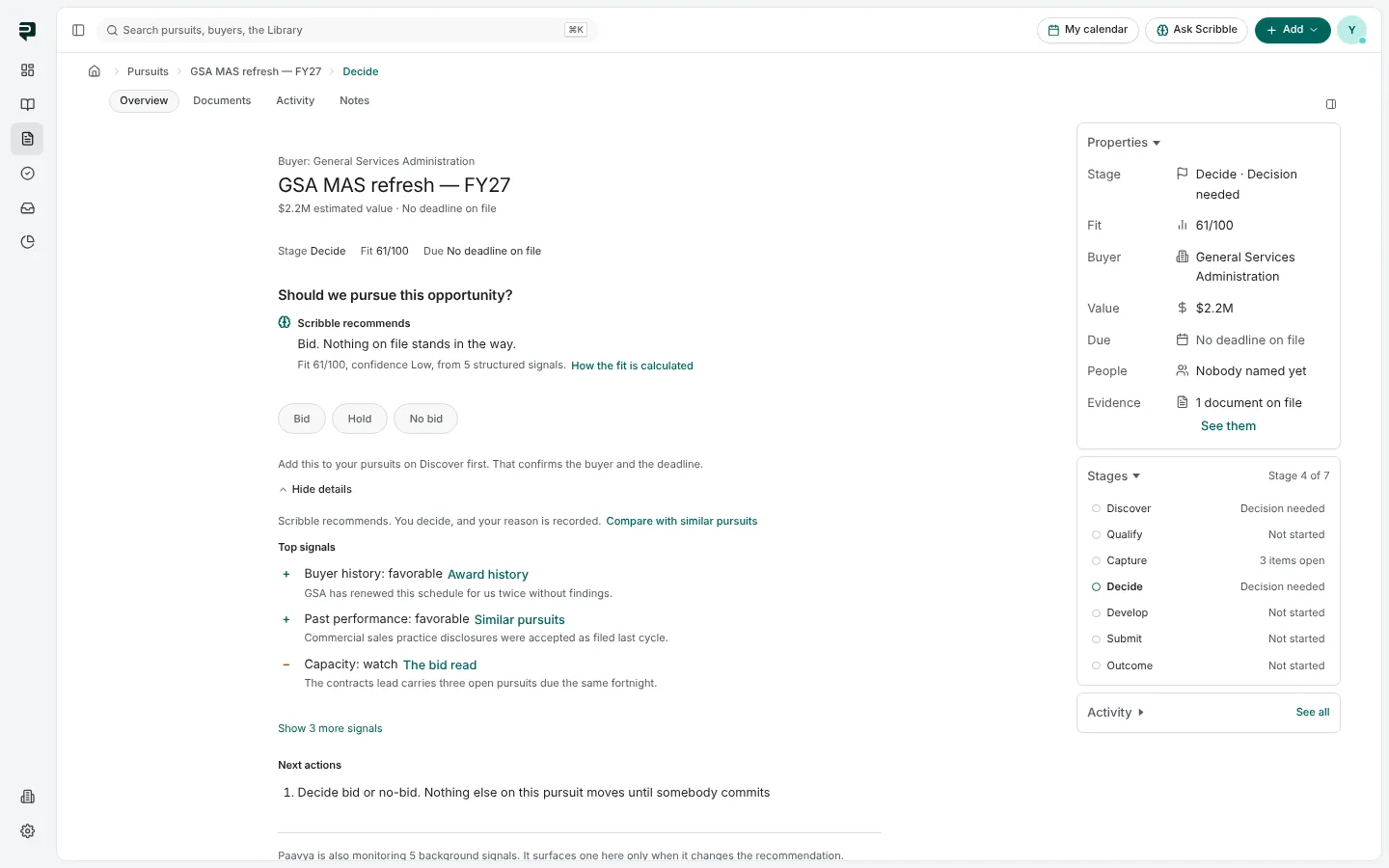
- Four pillars: buyer history, past performance, capacity and competitive signals. Each reads Strong, Watch or Risk, or No record when nothing is on file, never a guess. Open one for the evidence behind it.
- Evidence, Confidence and Risks count what the read rests on.
- Where you stand to win is shown apart from whether to bid. A contested position does not by itself mean pass.
To reach all of this, open Zoom out from the band at the top of the pursuit. The Decision card, the reads for and against, How the fit is calculated and How this is read are there. See The pursuit page.
Pictures are from Paavya's demo workspace, so names, bids and figures are illustrative. Something here does not match what you see? Tell us, or ask Scribe in the app.